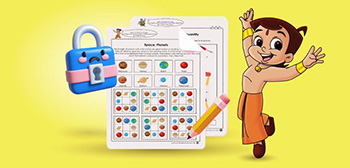

Introducing Nursery Worksheets for Young Children
Nursery worksheets are a great tool to help young children learn and develop important skills. However, introducing these worksheets to young children can be a challenging task. It is important to approach this task in a way that is engaging, fun, and encourages the child's natural curiosity and desire to learn.
These nursery worksheets often involve activities that require children to use their hands, such as colouring, tracing, and cutting. These activities help children develop their fine motor skills, which are important for activities such as writing and drawing. These worksheets often focus on basic concepts such as colours, shapes, and numbers. By completing these activities, children can develop their cognitive skills such as memory, problem-solving, and critical thinking.
In this blog post, we will explore some of the best ways to introduce nursery worksheets to young children.
1. Start with simple and fun worksheets
One of the best ways to introduce nursery worksheets to young children is to start with simple and fun worksheets. For this, consider the following tips:
- Start with basic shapes and colours: Introduce basic shapes and colours through simple colouring worksheets or tracing worksheets. These worksheets will help the child learn to recognize shapes and colours and develop their fine motor skills.
- Use familiar objects and animals: Children are naturally curious and interested in the world around them. Use familiar objects and animals, such as fruits, animals, or vehicles, to create fun worksheets that the child can easily understand and relate to.
- Incorporate fun themes: Use fun themes such as holidays, seasons, or favorite characters to create engaging worksheets that the child will enjoy. For example, create a Valentine's Day colouring sheet with hearts and love birds, or a Halloween worksheet with pumpkins and ghosts.
- Include simple activities: Incorporate simple activities such as cutting and pasting or tracing to make the worksheets more interactive and hands-on. These activities will help the child develop important skills such as hand-eye coordination and fine motor skills.
- Keep it age-appropriate: It is important to choose worksheets that are age-appropriate and suited to the child's developmental level. For young children, focus on basic concepts such as colours, shapes, and numbers, and gradually introduce more complex concepts as the child progresses.
2. Keep the worksheets short and sweet
Young children have a short attention span, so it is important to keep the activities short and sweet. Limit the time spent on each worksheet to no more than 10-15 minutes. This will help to keep the child engaged and prevent them from becoming bored or restless.
You may do this by following simple steps-
- Start with simple activities: Begin with activities that are easy for young children to understand and complete, such as colouring, tracing, or matching shapes.
- Keep it visual: Visual aids are a great way to help young children understand new concepts. Use pictures, diagrams, and other visual aids to help explain the concepts that are being introduced in the worksheets. This will help the child to understand the concepts better and make learning more enjoyable.
- Break up the worksheet into sections: Divide the nursery class worksheet into small sections, with each section focusing on a specific activity or concept. This will help prevent children from becoming overwhelmed and ensure that they stay focused.
- Make it fun: Incorporate games and activities that children enjoy, such as puzzles or memory games. This will help keep them engaged and motivated to complete the worksheet.
3. Praise and encourage:
Praising children is an important part of introducing nursery worksheets to them, as it can help boost their confidence and encourage them to continue learning. Working on nursery worksheets with their parents can also provide young children with an opportunity to bond with their parents and strengthen their relationships. Here are some tips on how to praise your child while introducing nursery activity sheets:
- Be specific: Instead of simply saying "good job", be specific about what your child did well. For example, you could say "I like the way you coloured inside the lines" or "You did a great job tracing the shapes".
- Focus on effort: Rather than focusing solely on the end result, praise your child's effort and hard work. For example, you could say "I'm proud of you for trying your best" or "You did a great job persevering through that challenging activity".
- Use positive language: Use positive language when praising your child, such as "I like the way you...", "You're doing a great job...", or "I'm proud of you for...". This will help reinforce positive behavior and encourage your child to continue learning.
- Avoid comparisons: Avoid comparing your child's work to that of other children, as this can create unnecessary pressure and discourage your child. Instead, focus on your child's individual progress and accomplishments.
- Celebrate progress: Celebrate your child's progress and milestones, no matter how small. For example, you could say "I noticed you're getting better at tracing the shapes" or "I'm so proud of you for completing that activity on your own".
4. Try multiple type of worksheets
Always prefer to have books designed by educationalists for preschoolers to support their learning outside the classroom. We have designed life skill worksheets apart from academic subjects such as games and sports, independent living and financial independence. You may try our featured worksheets to keep your child engaged meaningfully. Some of our featured worksheets are as follows-
- Tracing lines - These worksheets help the children to draw cursive, horizontal and vertical lines. By the time they will complete this worksheet, then they will be able to write letters on their own!
- Matching - These worksheets will help the children to recognize the same shapes and match them. You may print multiple nursery worksheet PDFs until the child gets a perfect match.
- Odd-One-Out - These worksheets help the children to match the similar items and recognize the odd one out.
Introducing a worksheet will help young children to develop their language skills, as they often involve reading and following instructions. This can help improve their vocabulary, comprehension, and communication skills. Also, completing these worksheets can give children a sense of accomplishment and boost their self-esteem. This can help them develop a positive attitude towards learning and a desire to continue learning. These worksheets can lay the foundation for future learning by introducing children to basic concepts and skills that they will build upon as they progress through school.
It is important to note, however, that nursery worksheets should be used as a supplement to other forms of early childhood education, and not as a substitute for play and social interaction. Children learn best through a variety of experiences and interactions, and nursery worksheets should be used in moderation to supplement these experiences.
In conclusion, introducing nursery worksheets to young children can be a fun and rewarding experience. By starting with simple and fun worksheets, using visual aids and hands-on activities, keeping it short and sweet, and praising and encouraging the child's efforts, you can help to create a positive learning experience that will lay the foundation for future academic success.